
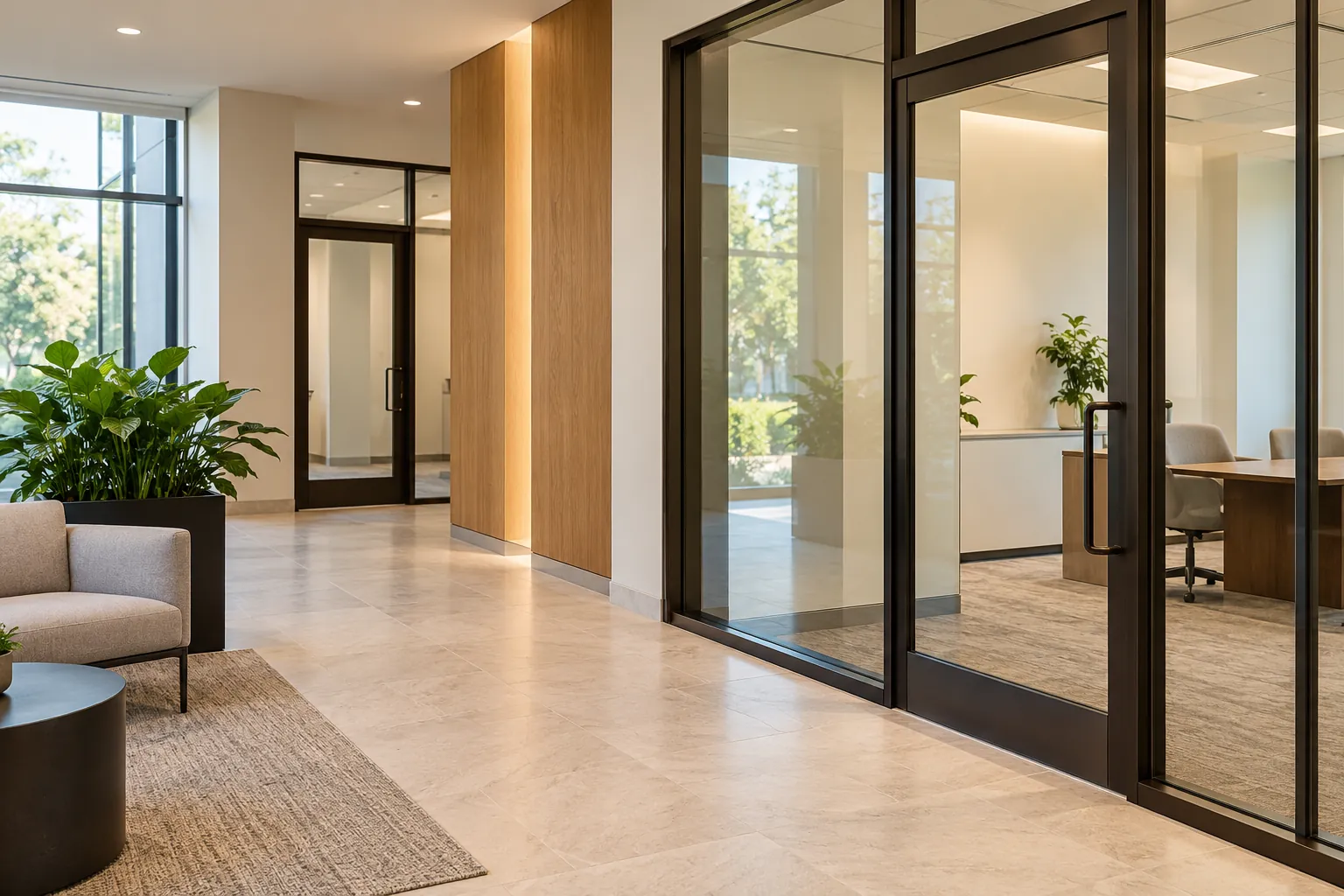
A storefront and a suite can be different jobs.
Reston has pedestrian village centers, offices and mixed-use buildings with entrances that do not always face the same vehicle approach. A shop near Lake Anne may be reached from a plaza, while an office may sit beyond a common lobby. Give the street address, suite and particular door rather than relying only on the business or center name.
Explain whether the hardware belongs to your leased space or a common area. Building management may control the lobby, shared corridor or parking entrance even when you manage the private suite’s keys. The request should stay within the doors and hardware the authorized person can approve.
Staff-key changes deserve a door-by-door list.
When a key is missing or responsibilities change, list the included locks and who should retain access. Note whether one key opens several doors and whether another key needs to remain separate. Keep working keys available so the existing arrangement can be understood before changes are proposed.
Suitable mechanical locks may be candidates for rekeying. Compatibility and the desired arrangement need to be checked; do not assume every lock can be combined onto one key. Electronic credentials, building fobs and managed access systems are separate from a mechanical staff-key change and should be discussed with the responsible administrator.
An unreliable entrance affects more than the keyholder.
A lock that sticks at opening time or a latch that does not catch consistently needs a clear description. Say whether the door can currently be secured, whether the symptom appears with the door open or closed, and which visible hardware seems loose or damaged. Avoid diagnosing the problem from appearance alone.
Business doors can use hardware unlike a standard home deadbolt. Describe the actual type and confirm whether it falls within the supported work. Repair, replacement and attention to the door’s fit are different possibilities; the useful question is what the assessment finds and how the proposed work addresses it.
When the team is waiting outside.
For a business lockout, explain whether the keys are inside, missing or present but no longer operating the lock. Have an owner, manager or other authorized decision-maker available and ask what documentation will be required. Being an employee at the address does not by itself clarify who can authorize alterations.
Include legitimate building access arrangements if the locked suite is behind a common entrance. If the issue is a common fob or building code, contact the property manager for that system. Discuss current availability for the actual door; a general service page cannot establish an arrival time or a particular entry method.
Make the scope useful to the business.
For commercial locksmith help in Reston, VA, describe the working hours or access restrictions that affect the proposed visit without assuming a particular appointment is available. Explain which door must remain usable and who will be present to approve the work. Keep unrelated shared systems outside the private-door request.
Ask the estimate to identify the included locks, labor, hardware and keys where applicable. If inspection changes the recommendation, review the revised scope and amount before proceeding. A clear handover should leave the authorized person knowing which keys operate the included doors and which separate building permissions still need attention.