
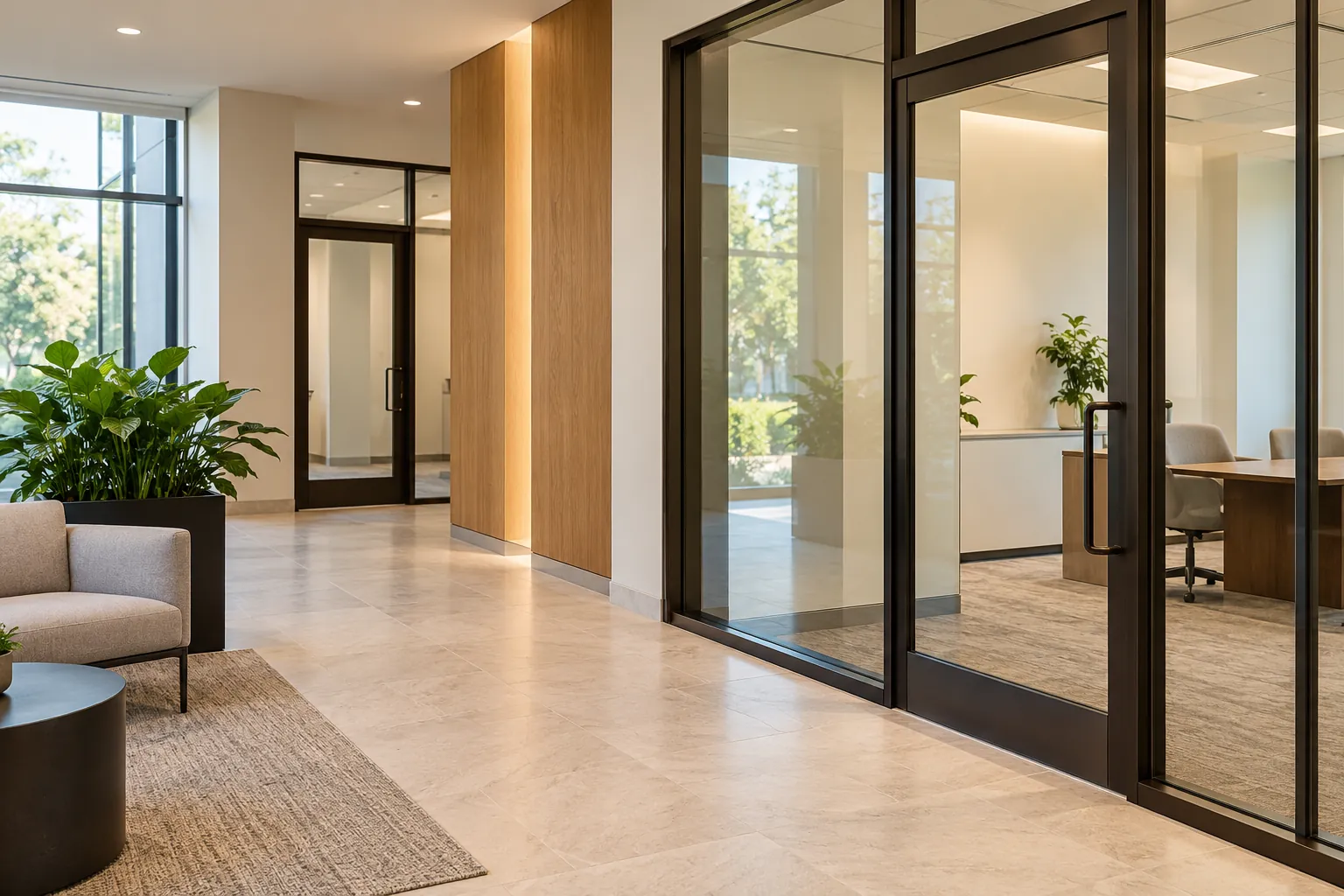
Name the door before the destination.
For a house, describe the front, side or garage-to-house entrance involved. For an apartment, explain whether you can reach the building but not the unit, or whether the shared entrance is the problem. These are different situations even when they share the same street address.
Reston’s pedestrian village centers can also put a shop entrance away from the nearest vehicle approach. If you are locked out near Lake Anne, for example, the business name and plaza are helpful context, but the actual unit, entrance and street access make the request much clearer. Do not assume the familiar landmark identifies the locked door.
Keep the route through the building clear.
An apartment or office may have a lobby before the private door. Say whether someone can provide legitimate access through the common entrance and whether the owner or property manager needs to be involved. A problem with a building fob or common-door code belongs with the person who administers that system.
Avoid asking another resident to bypass the building’s normal arrangements. Contact the relevant manager when shared access is the obstacle. For private-door work, explain your connection to the property and ask what documentation or authorization will be needed. Having the right person available can prevent confusion at the entrance.
A missing key and a failed lock lead to different decisions.
If the key is inside and the lock normally works, say so. If the key broke, stopped turning or was lost elsewhere, include that detail. Getting through the door is the immediate concern, but a damaged lock or an unaccounted-for key may leave another decision afterward.
A suitable lock may be a candidate for rekeying when you want a lost key to stop working. A difficult or damaged lock may need assessment for repair or replacement. Discuss the access request first, then make a separate decision about any additional work rather than assuming that an entry visit includes every follow-up change.
For a business, include the person who can approve work.
An employee waiting outside an office and an owner holding the lease may have different authority to approve changes. Have the appropriate owner, manager or authorized decision-maker available. Give the suite and door, including whether it is a storefront, an interior office or a staff entrance.
The same care matters if the business has several keys or a shared building entrance. Explain whether the request is only for access or also for a staff-key change. Do not assume a private suite lockout gives permission to alter a common lobby, shared system or another tenant’s entrance.
Ask about availability and the proposed work.
Call 571-619-6766 with the exact Reston address and entrance details to discuss current availability. If you cannot wait safely at the door, explain where you can be reached. An urgent request still needs an agreed scope; no arrival time or particular entry method should be assumed before the situation is assessed.
Ask what the estimate includes and whether inspection could change the recommended work. If a different method, replacement part or additional key work is proposed, confirm the revised amount and your approval first. Keep vehicle lockouts separate: the car’s location and vehicle details are the relevant starting information for that service.