
Begin with the movement you noticed.
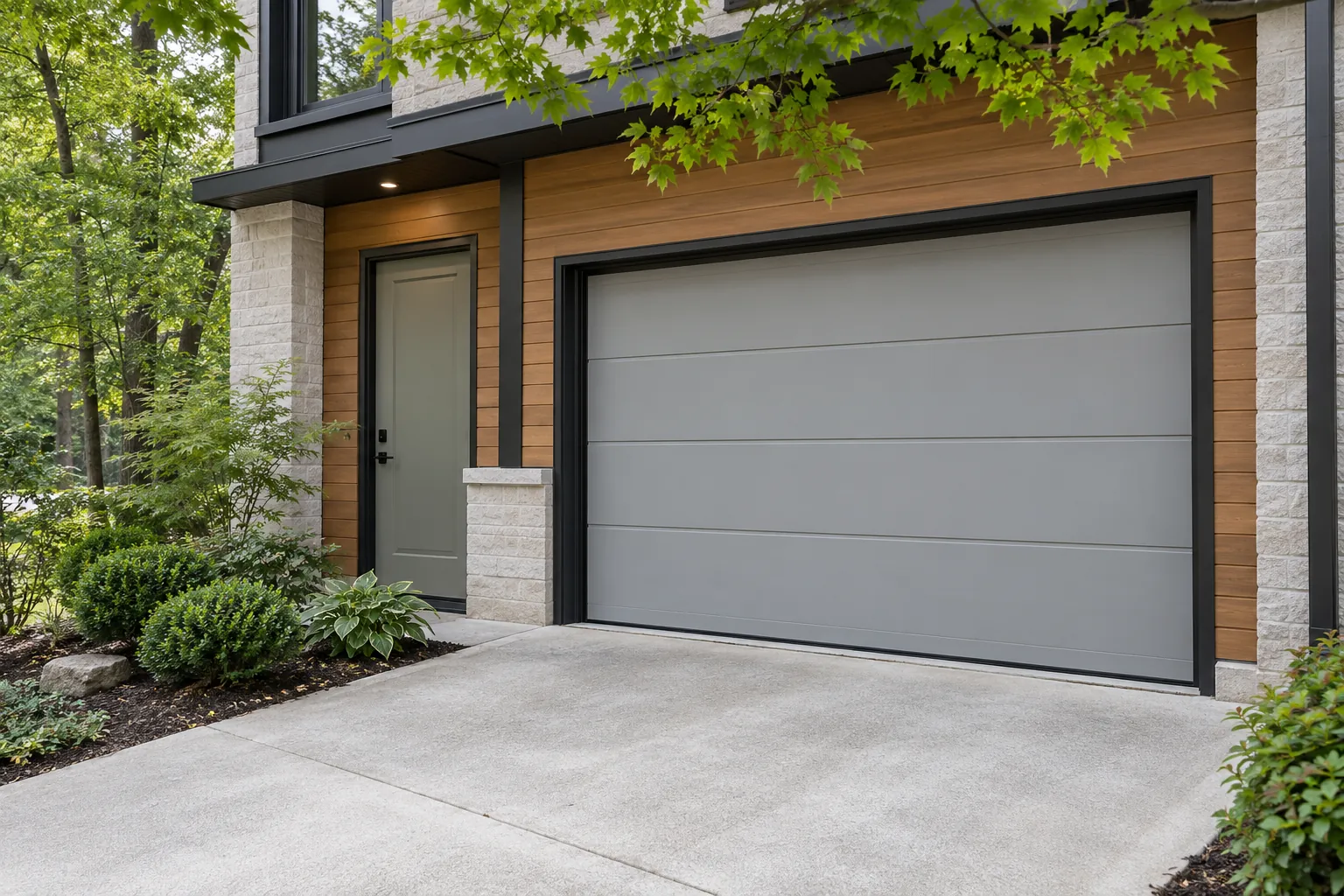
Say whether the overhead door is fully closed, open, partly raised or visibly uneven. Explain what happened during the last ordinary attempt to use it: no movement, a short movement, a reversal or a new sound. Include any visible damage you can observe from a safe position.
These details describe the symptom without deciding whether the spring, cable, opener or another part is responsible. Several faults can produce similar behavior. A repair recommendation needs assessment of the actual door and equipment, not a diagnosis based on a noise described over the phone.
The wall control and remote tell part of the story.
Mention which control you normally use and what happened with it. If you already noticed a difference between the wall button, keypad and remote, share that observation. There is no need to keep cycling a door that appears unstable just to complete a test list.
An overhead door’s movement problem and a single remote’s response are not automatically the same fault. Ask what equipment information is useful, such as a readable opener brand or model, and provide it only if accessible safely. Support for the specific door, opener and proposed work must be confirmed.
Which garage entrance is involved?
A private overhead door, the keyed door between a garage and house, and a common parking entrance are three different requests. If the overhead door works but a house key no longer turns, that is a mechanical lock question. Describe the entrance rather than using “garage door” for every door in the space.
In a Reston condominium or apartment building, a common garage barrier, fob or parking permission may be managed by the property. Contact that manager for shared-system issues. For a private overhead door, describe the equipment and observed problem when discussing repair. Keep the building’s parking permissions on a separate list.
Leave an unstable door alone.
If the door looks uneven, has visible loose components or is moving unpredictably, keep people and vehicles clear and avoid repeated operation. Do not attempt spring or cable work, reach into moving parts or improvise a way to hold a heavy door up. Describe what you can see without placing yourself underneath it.
Say whether a vehicle is inside and whether another normal entrance is available. Those details explain the practical effect of the problem, but they do not establish a guaranteed repair method or time. The appropriate next step depends on the condition and the equipment involved.
A repair estimate should explain the recommendation.
For garage door repair in Reston, VA, discuss the actual address, current door position and available equipment details. Ask about current availability, the assessment and the work the estimate includes. Clarify parts, labor and visit charges where applicable; a symptom does not establish the final repair cost.
If assessment changes the proposed work, confirm the revised scope and amount before approval. Where a proposed change affects the visible exterior, check any applicable owner, condominium or association requirements. Keep that property question separate from the immediate repair assessment, and avoid ordering components based only on an assumed diagnosis.